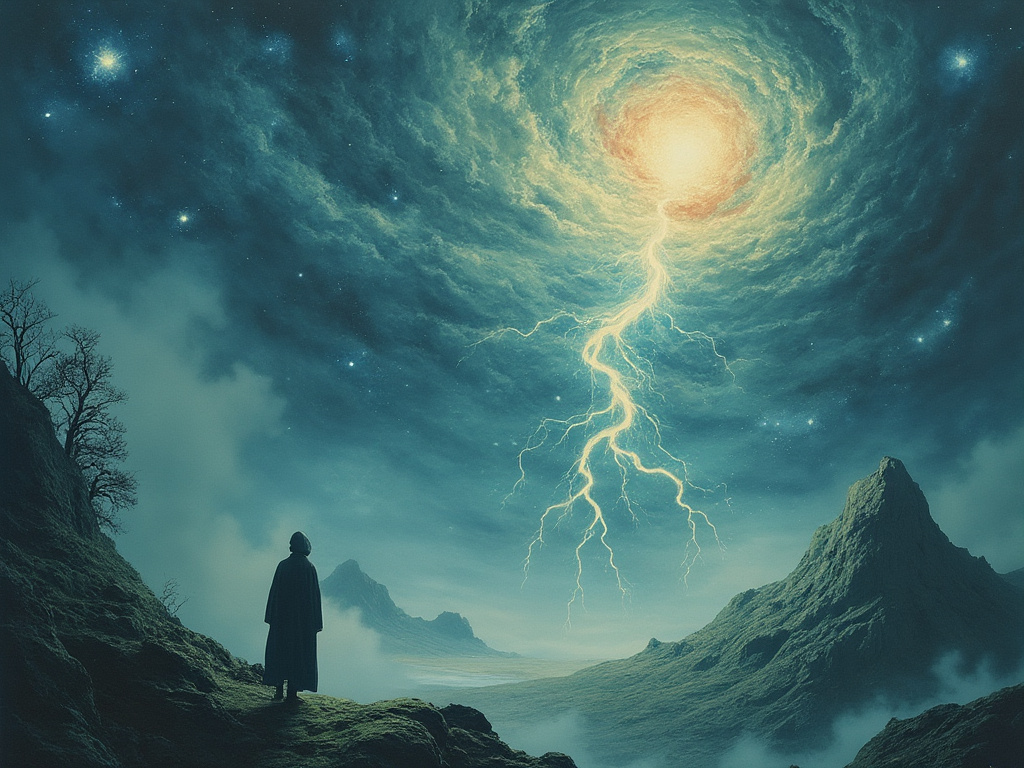

Hey there, ever feel like there’s a whole hidden world buzzing inside your head—one that’s smarter than you give it credit for, whispering secrets through dreams or that gut feeling when something’s off? That’s the kind of territory Carl Jung, the Swiss psychiatrist who broke away from Freud’s shadow in the early 1900s, loved to explore. Unlike the stuffy textbooks that make psychology sound like a math equation, Jung saw the psyche not as a broken machine to fix, but as a living, breathing adventure. A self-regulating system, he called it, always chasing balance and growth, like a river carving its path through stone.
I’ve dabbled in Jung’s ideas myself during a rough patch a few years back—those nights when anxiety hits like a freight train, and you wonder if your mind’s playing tricks or dropping clues. Turns out, it’s both. Jung didn’t just theorize; he dove headfirst into his own unconscious, scribbling visions in what became The Red Book. His big idea? The psyche is the totality of all your mental processes—conscious and unconscious—like the full ocean, not just the waves you see on top. And boy, does that change everything. Let’s unpack it, step by step, without the jargon overload. Think of this as your casual tour guide to Jung’s inner universe.
The Big Picture: Psyche as a Dynamic Duo
Start simple: Jung divided the psyche into two main realms—the conscious and the unconscious. But here’s where he parts ways with his old mentor Freud. Freud treated the unconscious like a dusty attic full of repressed sex drives and childhood baggage, the root of all neuroses. Jung? He said, “Nah, it’s bigger than that.” To him, the unconscious isn’t just your personal junk drawer; it’s a vast, inherited library shared by every human who’s ever walked the earth.
The conscious mind is your everyday captain: thoughts, feelings, and decisions you’re actively aware of. At its core sits the ego, your sense of “I”—the you that pays bills, argues with traffic, and scrolls memes at 2 a.m. It’s practical, but limited, like the tip of an iceberg. The ego keeps things running, mediating between your inner wild child and the world’s rules. But lean too hard on it, and you miss the depths.
Beneath that? The unconscious, which Jung split into two layers. First, the personal unconscious: stuff unique to you—forgotten memories, buried emotions, those awkward moments you shove down like last week’s laundry. It’s got “complexes,” emotional clusters that hijack your mood, like a grudge from high school flaring up during a board meeting. Not all bad, though; it holds untapped creativity too.
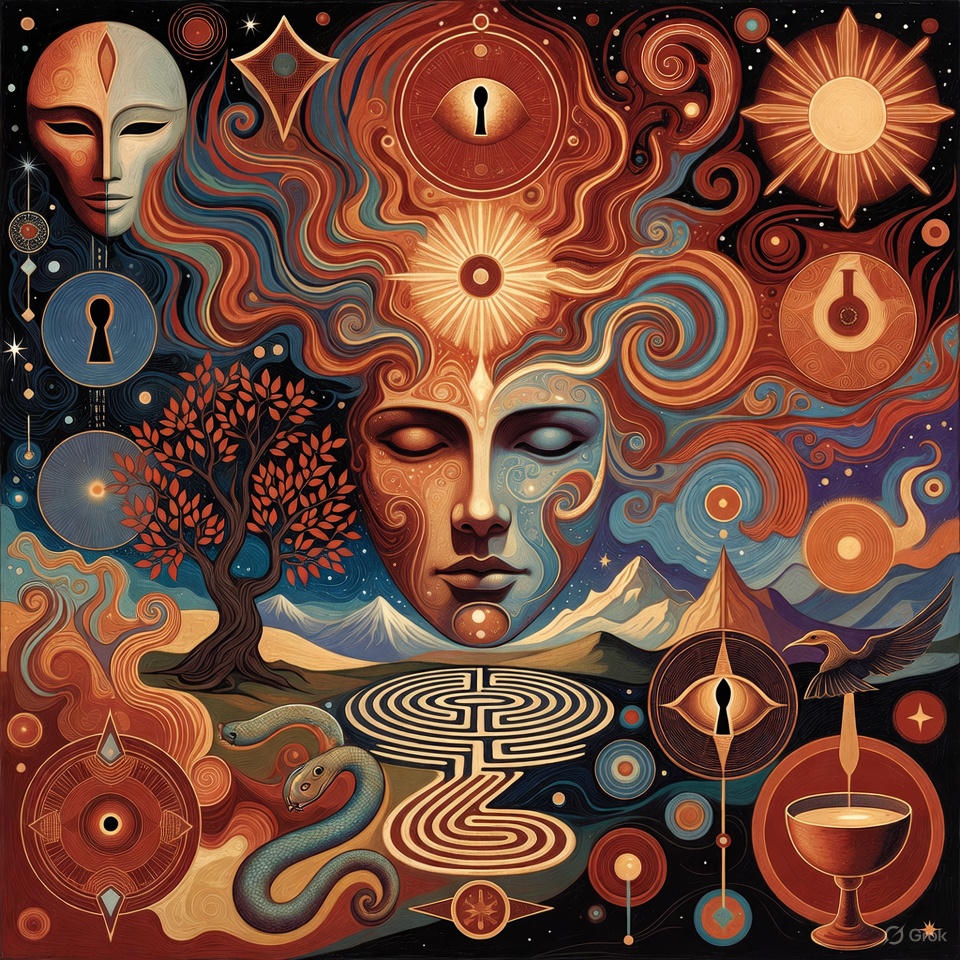
Then comes the star of the show: the collective unconscious. This isn’t personal—it’s universal, hardwired into our DNA from eons of human (and maybe pre-human) experience. Jung likened it to a “psychic system of a collective, universal, and impersonal nature which is identical in all individuals.” Imagine a shared psychic basement where myths, symbols, and instincts from every culture mingle. No wonder fairy tales from Grimm to Disney echo the same themes worldwide. It’s not woo-woo; Jung backed it with clinical evidence from patients’ dreams and delusions, spotting patterns no single life could explain.
Enter the Archetypes: Your Inner Cast of Characters
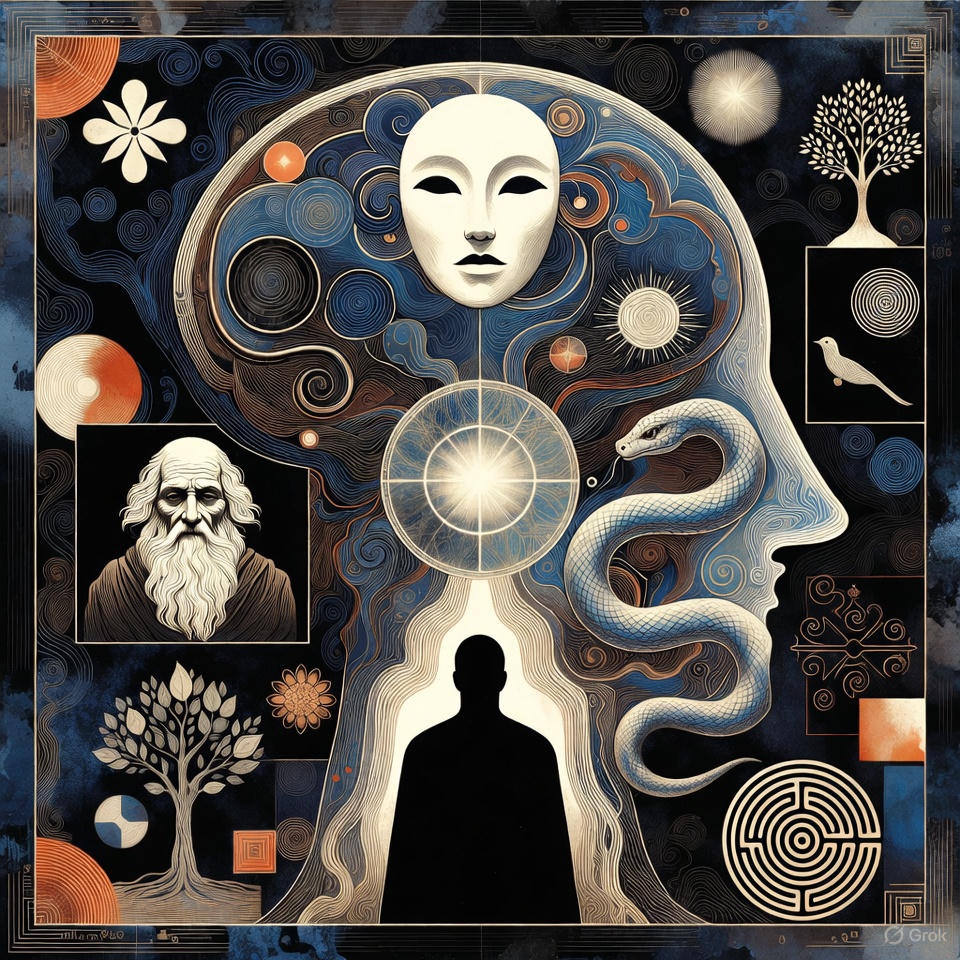
If the collective unconscious is the stage, archetypes are the players—innate blueprints or “primordial images” that shape how we think, feel, and act. They’re not literal figures but tendencies, popping up in dreams, art, and stories like recurring guests at a party. Jung identified dozens, but four big ones form the psyche’s core crew: the Persona, Shadow, Anima/Animus, and Self. Getting to know them? That’s like upgrading from a flip phone to a smartphone—suddenly, life’s glitches make sense.
First up, the Persona: your social mask, the “you” you polish for the world. It’s the professional smile at work or the witty banter on dates. Handy for fitting in, but overdo it, and you become a hollow suit—Jung called it “as if you had lost a good friend.” I remember faking confidence through a job interview once, only to crash emotionally later. That’s the Persona demanding airtime.
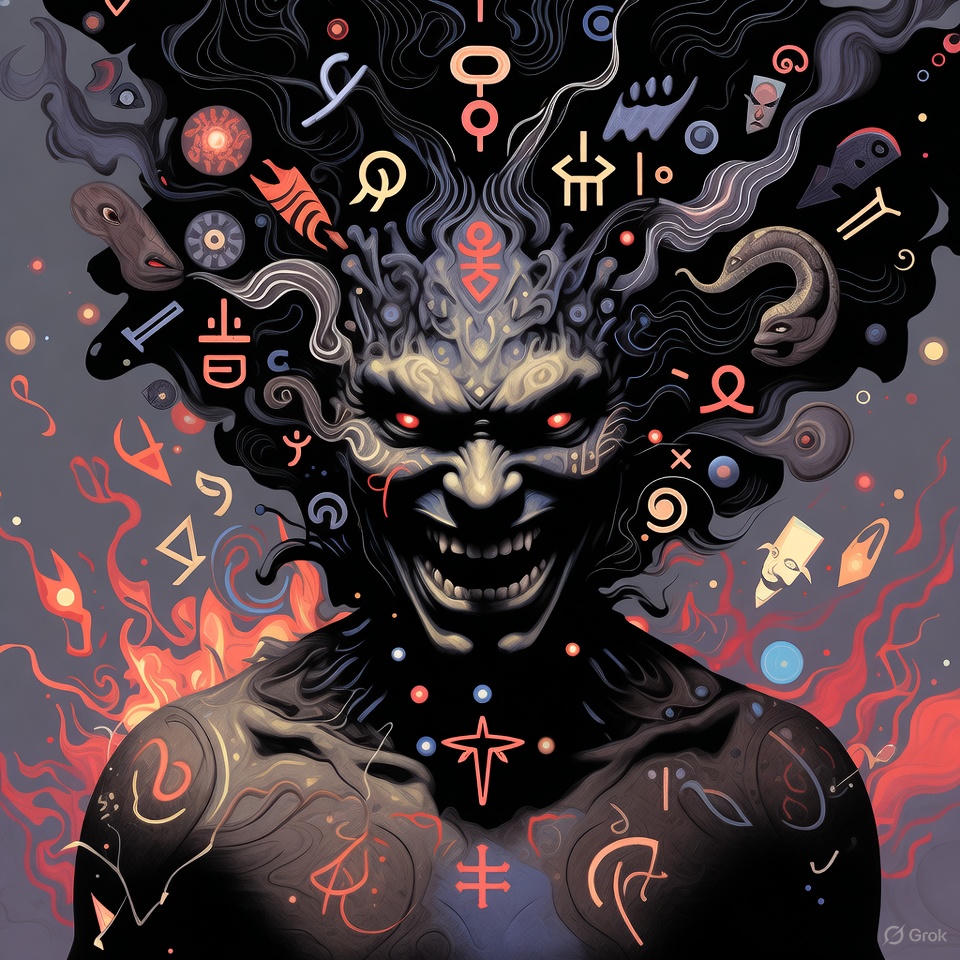
Flip side: the Shadow, the psyche’s rebel without a cause. This is everything you deny or project onto others—your anger, greed, or that sneaky jealousy when a friend succeeds. Freud might call it repressed id; Jung saw it as a vital, if prickly, ally. Ignore the Shadow, and it leaks out as road rage or passive-aggression. Integrate it? You gain raw power and authenticity. Jung warned it’s not all evil; it holds “normal instincts, appropriate reactions, realistic insights, creative impulses.” Think of it as the dragon in your cave—slay it wrong, and you’re toast; befriend it, and it guards your treasure.
Now, the Anima/Animus: Jung’s nod to our inner opposite. For men, the Anima is the feminine soul—intuition, emotion, mystery—often projected onto romantic partners (hello, idealization crushes). For women, the Animus is the masculine: logic, assertiveness, spirit. It’s contrasexual, bridging your gender to the collective’s yin-yang balance. Mess this up, and relationships turn stormy; harmonize it, and you access wholeness. Jung drew from myths like Eros and Psyche, seeing it as a guide to the soul’s depths.
At the helm of it all? The Self, the psyche’s North Star. Not the ego’s puffed-up “me,” but the totality—the unified conscious and unconscious, pulling toward individuation, Jung’s lifelong quest for self-realization. It’s the mandala in your dreams, the “organizing genius” behind growth. Midlife crises? That’s the Self knocking, urging you beyond comfort zones. Jung hit his own stride in his 40s, post-Freud split, by journaling visions and myths. The result? A richer, if weirder, life.
Freud vs. Jung: Why the Split Mattered
You can’t talk Jung without Freud—they were like rock band buddies who imploded over creative differences. Freud’s psyche? A battlefield: id (primal urges), ego (reality checker), superego (inner cop), all fueled by libido as sex energy. Unconscious = repressed trauma, fixable via talk therapy to air the dirt.
Jung respected the groundwork but called it too narrow, like mapping a forest by one tree. “Freud’s unconscious is personal and negative; mine’s collective and creative,” he might say. Where Freud fixated on childhood sex and aggression, Jung zoomed out to spirituality, myths, and future potential. Dreams? Freud’s wish-fulfillment puzzles; Jung’s bridge to the collective, packed with symbols for growth. Religion? Freud’s illusion; Jung’s archetype goldmine. This rift birthed analytical psychology—less couch confession, more myth-making and active imagination (Jung’s term for guided daydreams).
Critics knock Jung as mystical fluff, but his ideas lit up fields from literature (think Joseph Campbell’s hero’s journey) to therapy (modern Jungians tackle everything from addiction to eco-anxiety). And in our algorithm-driven world? His warnings on Shadow projection explain cancel culture mobs as well as any tweet.
Why Dive In? Your Psyche’s Calling
So, how’d Jung see the psyche? As a wild, wise ecosystem—not a problem to solve, but a partner to dance with. It’s got your ego steering the ship, a Persona for polite waves, a Shadow stirring the depths, Anima/Animus adding flair, and the Self charting the stars. The goal? Individuation: weaving these threads into a tapestry that’s uniquely, gloriously you.
Next time a dream nags or intuition tugs, don’t brush it off—grab a journal. Sketch that weird symbol, mull what it stirs. Jung bet it’d lead to gold. Me? After my anxiety-fueled flirt with his work, I started spotting Shadows in old habits and Animas in my creative blocks. It’s messy, profound, and yeah, a little scary. But isn’t that the point? Your psyche’s not hiding from you—it’s waiting for you to show up.
What about you? Ever had a “Jungian” moment that flipped a switch? Drop a comment; let’s unpack it together. After all, as Jung said, the psyche seeks wholeness—if we just listen.